Showing posts with label Monochrome. Show all posts

Tuesday, September 27, 2016

Monochromatic Self Portraits

During the first two weeks of school, students in every grade level created monochromatic self portraits using different shades of just one color. Students used crayons, markers, and colored pencils to represent themselves in realistic, cartoon and abstract ways. Students had made self portraits in the past, but this time it was challenging to be limited to just one color family! Older students were encouraged to show emphasis using these materials, separating their self portrait from the background to help their work stand out. Learn more about our process here.

Then all of the monochromatic self portraits were sorted by color and counted, with the help of after school 5th grade volunteers, and arranged in rainbow order before being stapled and taped onto larger panels.
This week, all of the monochromatic self portraits were put together in two separate rainbow displays. There are more than 570 students here at Hosmer, so we could not fit them all on one bulletin board! Below are our monochromatic self portrait murals on display. Check them out in person at Back to School Night, this Wednesday, September 28 from 6-8pm. 

Monday, February 22, 2016

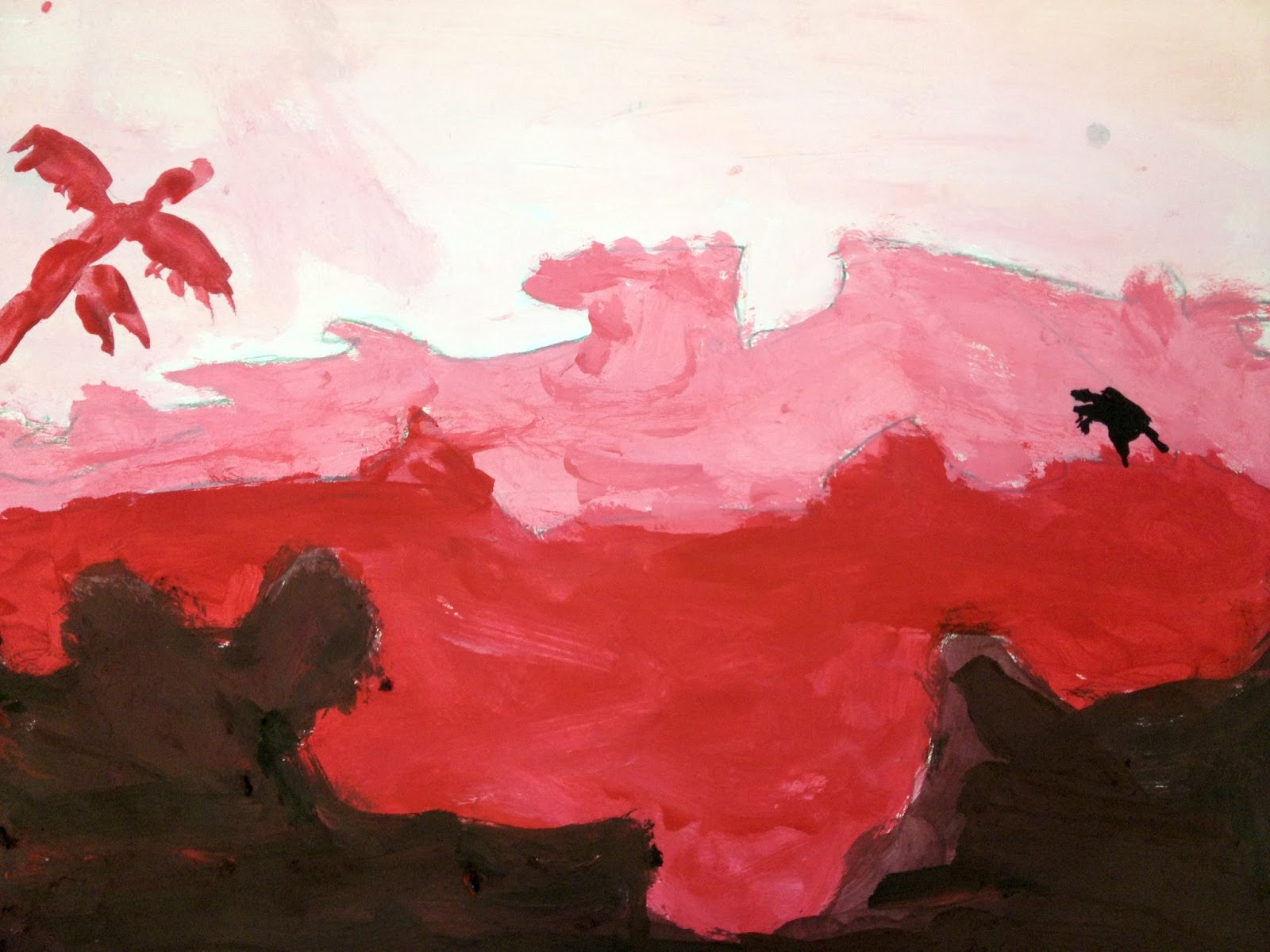
Monochromatic Tints & Shades Landscapes

Continuing our study of value, 5th grade artists explored tints and shades of colors. Tints are made by adding white to a color and shades are made by mixing black with the color. We began by practicing mixing our shade and tints, choosing three different colors to explore. We also learned about the concept of atmospheric perspective, which can be seen in many landscape photographs and paintings.
Atmospheric perspective describes the effect of objects being lighter in color as they get further away from you, and darker in color when they are closer. In addition, you can see more detail in the foreground and less detail in the background. We looked at some examples of photographs and paintings that demonstrate this concept. 
We discussed how landscapes can be organized with a foreground in the front, middle ground, and background. We looked at different examples of landscapes, including rural or countryside landscapes, urban cityscapes, and even fantasy landscapes inspired by books and video games. Students sketched a landscape of their own creation, including more details in the foreground, and numbering their layers to match the tints and shades gradients they painted earlier. 
The following class, students chose just one color to use for their tints and shades in their artwork, based on their explorations. When artists use shades and tints of the same color in their artwork, it is called monochromatic
Students began painting the background or the lightest layer first, and then painted each layer a darker tint until they arrived to their color and their shade. We discussed keeping the details as silhouettes, or outlines of the shapes. 
At the end of their project, students completed self assessments where they reflected on whether they had been able to create a monochromatic tints and shades landscape with a foreground, middle ground and background. Students also shared what was challenging and what they were most proud of in their art making process and artwork. Many students found it challenging to mix enough of a color to paint with, create different tints, and paint smaller details. Many students were proud of the landscape they had designed (whether it was inspired by a family trip or a favorite video game), their ability to mix a variety of tints and shades in their artwork, and specific details such as their dragon or their trees. Here are some examples:
Sandra, 5th grade (Bellis)
Katie, 5th grade (Bellis)
Lara, 5th grade (Psychoghios)
Cristian, 5th grade (Domermuth Fantasia)
Anthony, 5th grade (Domermuth Fantasia)
Anita, 5th grade (Domermuth Fantasia)
Ava, 5th grade (Psychoghios)
Casey, 5th grade (Bellis)
Bianca, 5th grade (Twomey)
Jack P., 5th grade (Twomey)
Catherine, 5th grade (Twomey)
Olivier, 5th grade (Twomey)
Ryan, 5th grade (Domermuth Fantasia)

Wednesday, April 29, 2015

Louise Nevelson Inspired Assemblages

PK and Kindergarten artists have been exploring texture this past month, through texture rubbing and texture printing. This week, we learned about the artist Louise Nevelson and how she made artwork from materials she found. Nevelson used objects that she found on the streets of New York City and wooden scraps from factories to create her assemblages, which are like sculptures.
Louise Nevelson, Royal Tide I (1960)
We looked at and discussed some examples of her work and students noticed that there are many different shapes that remind them of different things that they know in the real world, and that she also painted them all one color.
Louise Nevelson, Moon Star Zag VIII (1981)
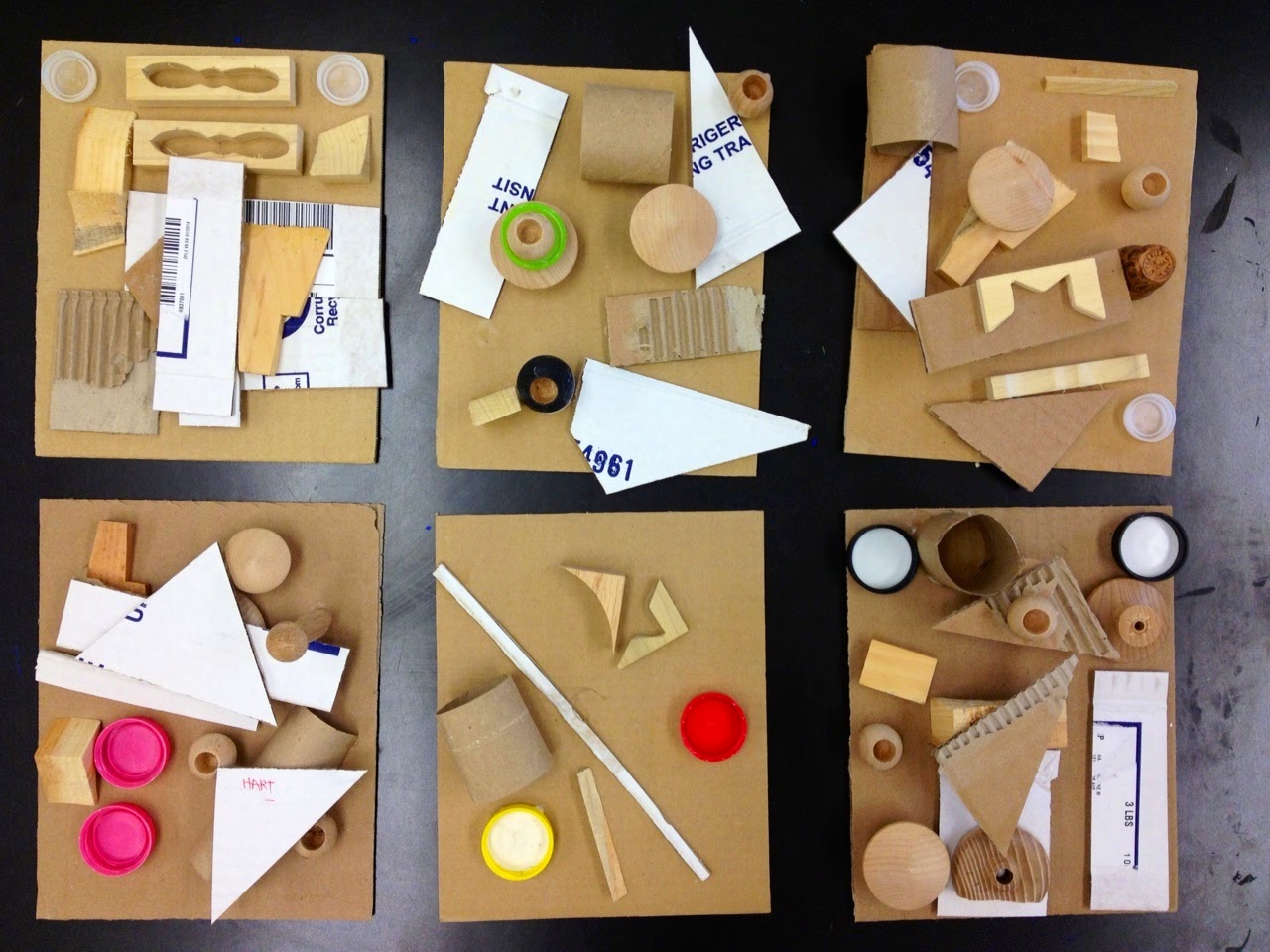
Students started with a rectangular piece of cardboard and selected a variety of different objects and materials to create their own assemblages. There were plastic bottle caps (thanks to all the families that brought them in!), cardboard shapes and scraps, as well as a variety of wooden pieces. Students could choose up to 2 bottle caps, 5 cardboard shapes, and 8 wooden pieces.
We used glue to help construct the assemblages. Students thought carefully about how to arrange their materials and considered how they might best fill up their space. Students also thought about layering materials on top of each other. 
 Here are some examples of our assemblages.
The following class, the assemblages had dried and were ready to be painted. We noticed that Nevelson painted her assemblages all one color, whether it was black, white or gold. We talked about why she chose to do this, and how this made it less distracting for the viewer and allowed textures and shapes to be the focus.
We chose one color to paint with and made sure to paint our entire assemblage, turning it around as we painted to make sure we got all the nooks and crannies! 
We also made sure to be gentle with the paint brush so materials would not fall off our assemblages. Here are some of the assemblages painted:


Some of our assemblages will be displayed in the glass case on the first floor near the lobby when all the classes are done painting, so keep your eye out for them soon!

Monday, April 13, 2015

Monochromatic Tints Landscapes

Continuing with our study of value, 5th grade artists explored tints, which are made by adding white to a color. Students mixed white to a primary color, secondary color and tertiary color (which they also practiced mixing). The following class, they selected just one color to use for their tints gradient. Each student painted a piece of paper folded into 4 sections with tints of that chosen color. 
We then learned about the concept of atmospheric or aerial perspective, which can be seen in many landscapes. Basically, colors get lighter as things get further away from you. In addition, you can see more detail in the foreground and less detail in the background. 
We looked at some examples of photographs and paintings that demonstrate this concept.
Albert Bierstadt, The Rock Mountains, Lander's Peak (1863)
Students then sketched out their own landscape, deciding between a rural landscape and an urban landscape. The landscape included 4 layers, going from dark to light, with more detail in the foreground than background. After sketching, students drew their landscape on the back of each painted section of paper and cut them out before assembling and gluing them down as a collage. 
Many students went back and added more details by cutting out shapes from the leftover painted scraps of paper to make their landscapes more interesting. 
Lastly, students mixed their lightest tint and painted the remaining background. We learned that when an artist makes an artwork using different tints and shades of one color, this is called monochrome. We had a gallery walk of our finished monochromatic landscapes to see everyone's work. Here are some examples:
Taylor, 5th Grade
Alex, 5th Grade
Daniella, 5th Grade
Malcolm, 5th Grade
Lameh, 5th Grade
Ariana, 5th Grade